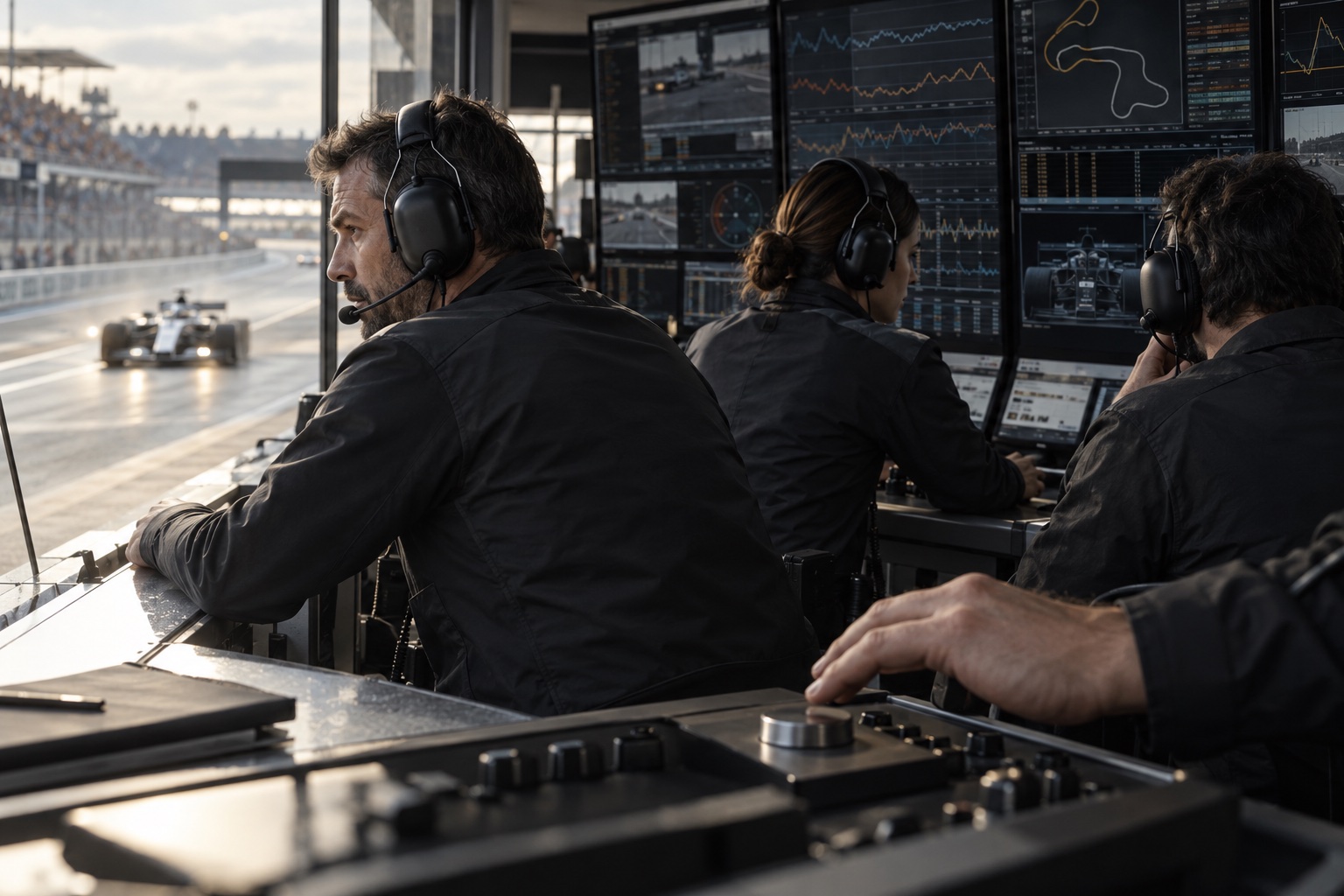
In the regulatory and corporate design of artificial intelligence, one clause is repeated as an almost protective guarantee: the system does not operate autonomously because there is always a person in the control loop (human-in-the-loop). The existence of that final signature allows executive committees to certify that human judgement remains intact and that ultimate responsibility has been assigned.
Yet research on human–system interaction has consistently shown that the presence of an operator in the loop does not guarantee the exercise of their judgement. When a platform presents a recommendation supported by millions of probabilistic variables, the cognitive and professional cost of contradicting its calculation is disproportionately high. If the supervisor agrees with the system, nobody questions the process; if the supervisor acts against its recommendation and the action fails, the entire burden of proof falls on that individual departure.
This dynamic produces an inevitable consequence: the human in the loop stops supervising and starts ratifying. The procedure meets the formal requirement on paper, but the actual function of control is hollowed out.
Telemetry versus friction on the track
Elite sport under intensive monitoring illustrates this collapse of assisted judgement with surgical precision. In disciplines such as circuit racing or racket and field sports, control teams receive thousands of data points per second: component temperatures, estimated degradation, opponents’ heat maps and success probabilities calculated by Monte Carlo simulations.
The theoretical model assumes that the engineer on the pit wall or the athlete on the field analyses this information to make more rational decisions. The reality of competition shows the opposite:
1. The tyranny of reaction time
When data updates faster than humans can deliberate, the person is forced to follow the software’s prescription without room to audit its premises. During a pit stop or a tactical change of serve, there is no time to check whether the model is giving excessive weight to an anomalous variable. The operator merely presses the confirmation button.
2. Blindness to data that cannot be parameterised
Telemetry measures a component’s theoretical wear with mathematical precision, but cannot capture the changing texture of a kerb accumulating rubber, a gust of wind between two corners or an opponent’s fleeting hesitation at the net. When decision-makers become accustomed to looking only at the screen, they ignore direct physical signals that contradict the model.
3. The victory of deliberate anomaly
Some of the most consequential achievements in competitive performance occur when human judgement interrupts the statistical pattern, rather than precisely executing the curve prescribed by the simulator. The driver who extends a stint because they feel grip through their fingertips despite the computer’s warning, or the player who breaks the optimal passing distribution to force an unexpected pause, is not failing: they are exercising the real function of command against the inertia of average calculation.
The conditions for effective control
The problem of human oversight in businesses and institutions cannot be resolved by writing more ethical codes or adding approval boxes to digital workflows. If an organisation truly wants people to keep making decisions, it must design systems that make disagreement operationally and culturally viable:
1. Actual time for deliberation
If a process requires validation within milliseconds, the human in the loop is merely a biological automaton. Real oversight requires control points that provide enough time to analyse the system’s rationale, rather than only its final output.
2. Access to independent sources of information
A supervisor cannot assess an algorithmic proposal’s validity if all available information comes from the same tool that generates the recommendation. Judgement requires parallel data channels that have not been processed by the model itself.
3. Explicit protection for reasoned dissent
If departing from the algorithm’s verdict brings a penalty when things go wrong, while following it guarantees technical immunity, the operator will always choose passive ratification. Institutional governance must protect the right to contradict the metric when specialist judgement identifies variables the system has overlooked.
Supervise or abdicate
Ensuring that a machine does not operate alone is not the same as ensuring that a human is in command. Keeping a person captive to a dashboard they do not understand or cannot question is a form of inadvertent surrender that evades management responsibility.
Organisations do not protect themselves by accumulating interfaces that demand routine signatures. They protect themselves by training teams to question software’s apparent certainty and by preserving the operational courage to make decisions that no spreadsheet could justify in advance.